
We’ve all been there: mindlessly scrolling through a social media feed, thumb flicking upward in a rhythmic, almost hypnotic trance. Dozens of ads flash past, but your brain registers virtually none of them. This state of passive consumption is called banner blindness or “scroll trance.” For marketers, it’s a nightmare. For creators, it’s the ultimate challenge. So, how do you snap someone out of a digital coma long enough to pay attention to your brand? Pattern interruption.
What is a Pattern Interruption?
At its core, a pattern interruption is a technique designed to alter an individual’s automatic behavior, thought process, or state. Rooted in Neuro-Linguistic Programming (NLP) and behavioral psychology, it works by introducing an unexpected element into a predictable routine. When a person encounters something that doesn’t fit their brain’s immediate expectations, their cognitive pilot turns off, and their active awareness turns on.
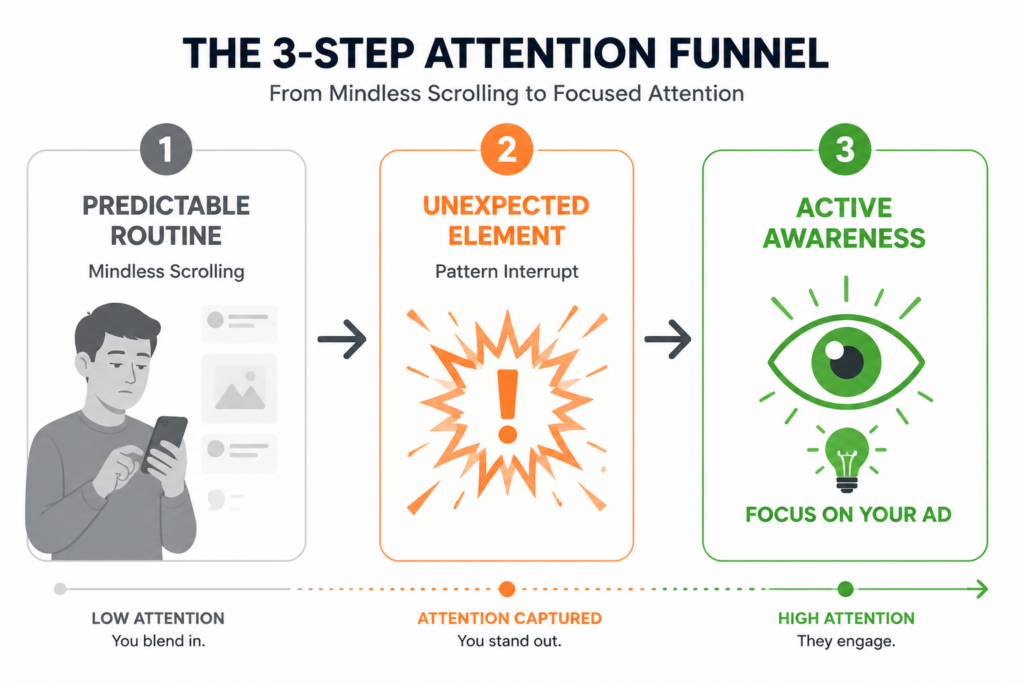
Pattern Interruption is: an ad unit that refuses to look like an ad.
The human brain processes vast amounts of sensory information by relying on shortcuts (heuristics). When scrolling social media, your brain categorizes content almost instantly:
-
Friend’s vacation photo? Keep scrolling.
-
Polished corporate ad with stock photos? Ignore.
-
Another video essay with standard subtitles? Move past.
If your ad looks, sounds, or acts like a standard ad, viewers will filter it out before they even realize what you’re selling. A successful pattern interrupt creates a brief cognitive “glitch” that forces the viewer to pause and ask, “Wait, what is this?”
4 Ways to Use Pattern Interrupts in Your Ad Units
You don’t need a million-dollar production budget to break a user’s scroll. You just need to disrupt their visual or conceptual expectations.
1. Visual Disruption
Start with something that visually breaks the feed’s aesthetic.
-
The “Ugly” Aesthetic: In a sea of hyper-polished, high-production videos, a raw, low-fi video shot on an old phone stands out immediately.
-
Unusual Color Palette: Use vibrant, contrasting, or intentionally mismatched colors that clash with the platform’s default interface design.
-
Text in Motion: (This is my favourite) Start a video with text moving in an unconventional direction (e.g., upside down, side-scrolling, or appearing letter-by-letter out of order).
2. Audio & Silence
Most users scroll with sound off, but for those with sound on, audio cues are immensely powerful.
-
Sudden Silence: If every video in a feed features loud trending audio, starting your video with total, ambient silence can draw immediate focus.
-
Jarring Sound Effects: A sudden record scratch, a unexpected chime, or an unusual voice pitch forces the brain to pay attention.
3. Contextual Subversion
Make the user think they are looking at something else entirely.
-
UI/Platform Mimicry: Design your creative to look like a system notification, an OS error message, or a standard text message draft (while ensuring you comply with ad network policies).
-
“Fake” Glitches: A brief screen flicker, static burst, or a fake “loading” icon in the first second can make users think their device is acting up—stopping them in their tracks.
4. Direct Narrative Hooks
Say something unexpected in the first two seconds.
-
Instead of: “Here’s why you need our productivity app…”
-
Try: “Stop using productivity apps. Seriously.”
Contradicting common sense or opening with an anti-pitch forces the brain to stick around to find out why you made such a claim.
Examples:
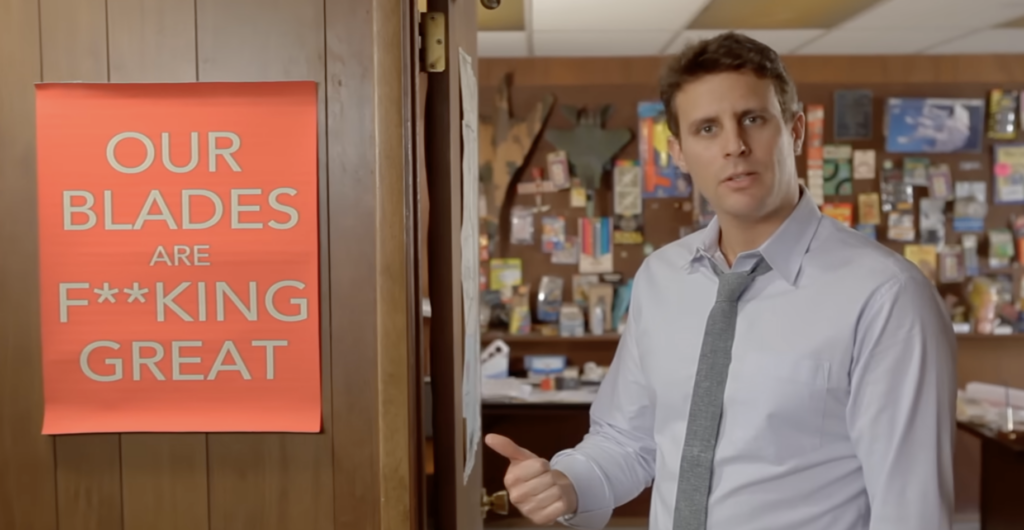
“Our Blades Are F***ing Great” (Dollar Shave Club)
The Concept: Before this launch ad, razor marketing was dominated by glossy, hyper-masculine spots featuring professional athletes, high-tech 3D blade animations, and serious voiceovers. DSC opened their video with the founder walking through a messy warehouse, deadpan telling the viewer, “Hi, I’m Mike… Is our razor any good? No, Our blades are fucking great.”
Why the Interrupt Worked: It stripped away corporate polish in the first three seconds, replacing traditional sales-speak with blunt, unscripted humor. It broke the category pattern so effectively that it launched a billion-dollar brand.
Watch It: Dollar Shave Club Launch Video (YouTube)
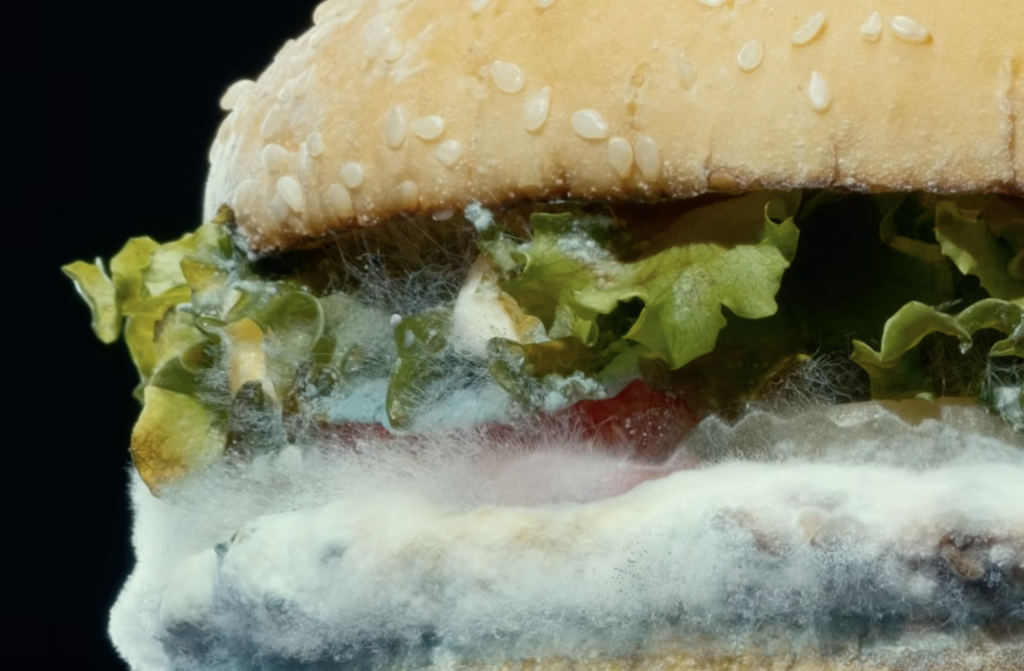
The Moldy Whopper” (Burger King)
The Concept: Fast-food marketing relies heavily on hyper-pristine, heavily edited food photography designed to look mouth-watering. Burger King did the exact opposite: a time-lapse ad showing a Whopper decaying and growing thick green mold over 34 days to prove they removed artificial preservatives.
Why the Interrupt Worked: Disgust is a powerful emotional trigger. In a feed full of polished food shots, seeing a rotting burger caused an immediate double-take. It subverted food advertising norms to make a point about ingredients.
The golden Rule: The Interrupt is Only Step One
A pattern interruption gets you through the front door, but it will not close the deal on its own.
Warning: An interrupt without a meaningful payoff is just clickbait. If you shock a user into stopping, but your message immediately afterwards is boring or irrelevant, you will breed frustration rather than interest.
Once you break the pattern:
-
Pivot quickly to the actual value proposition.
-
Keep the momentum with fast-paced, engaging content.
-
End with a clear, low-friction Call to Action (CTA).
Final Thoughts
In a feed full of noise, standing out isn’t about shouting louder; it’s about making a sound no one expected to hear. By strategically incorporating pattern interrupts into your digital ad units, you turn mindless scrollers into engaged prospects.
If you want to stop the mindless scroll and convert your audience into customers email me and let’s chat. – Kevin